

Why Hire a Wedding Planner?
Hiring a wedding planner can sometimes be seen as an extra rather than an essential part of planning a wedding. But for the right celebration and the right couple, professional planning support can make an enormous difference.
A wedding planner isn't simply there to find suppliers or make things look beautiful. Much of the real work happens behind the scenes: managing budgets, reviewing logistics, coordinating suppliers, anticipating problems, keeping plans moving and making sure hundreds of individual decisions eventually come together as one coherent celebration.
This becomes particularly valuable for complex weddings such as marquees, private homes, dry-hire venues and multi-day celebrations, where there may be no venue team responsible for bringing everything together.
So, do you need a wedding planner? Here's what professional planning support can actually bring to your wedding.
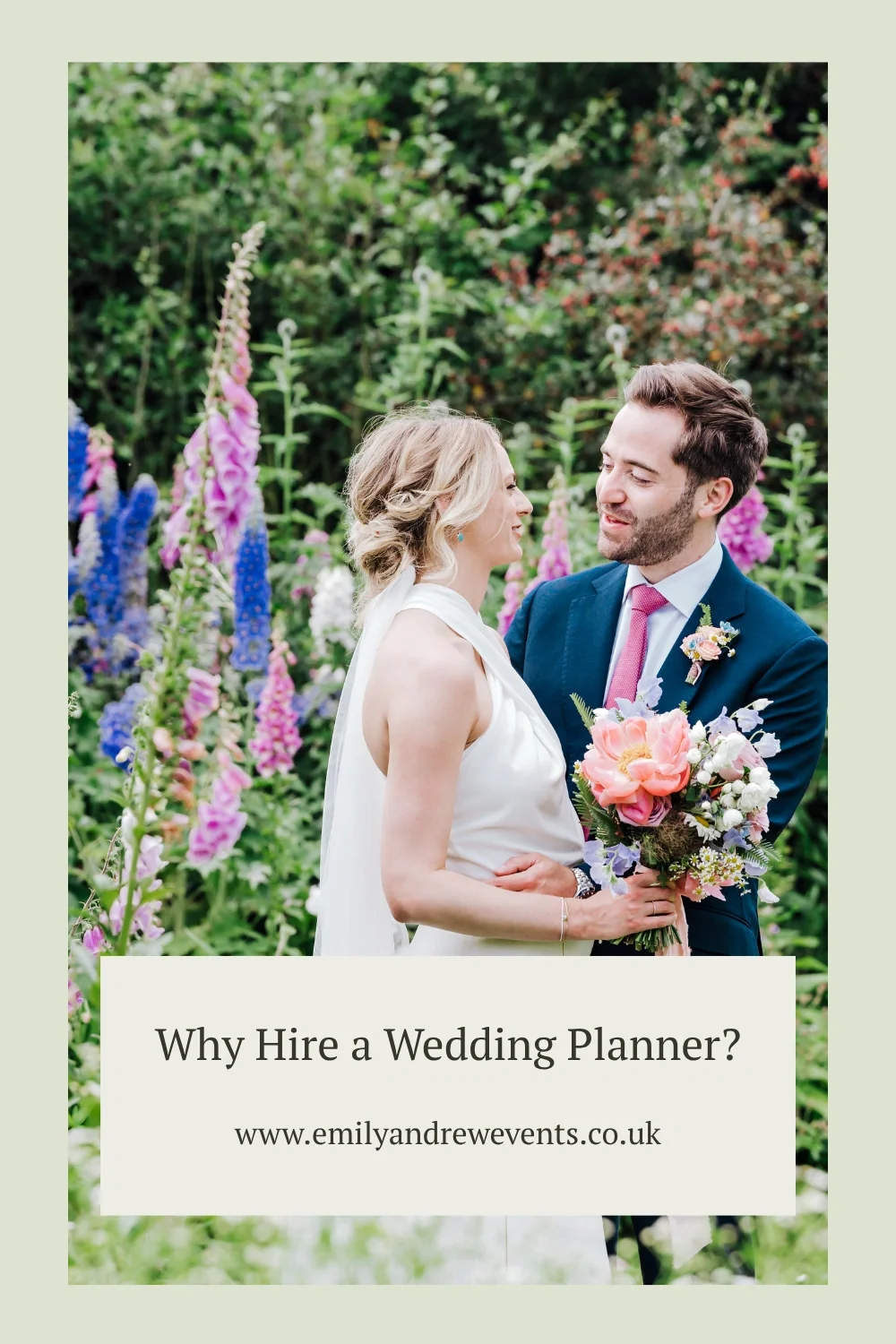
A wedding planner gives you somewhere to start
The early stages of wedding planning can be surprisingly overwhelming.
You may have ideas about how you'd like the wedding to feel, but turning those ideas into a realistic plan involves decisions about budget, guest numbers, venues, suppliers, timings and priorities, often before you have enough experience to know what should come first. An experienced planner can help you establish those foundations.
Rather than spending weeks researching everything independently, you have someone who understands the process and can help you focus on the decisions that matter now, rather than the ones that can comfortably wait.
A wedding planner can help you use your budget wisely
Budget management is a significant part of professional wedding planning. This doesn't mean simply finding the cheapest suppliers. It's about understanding what things realistically cost, allocating your budget according to your priorities and identifying where money will make the greatest difference. It also means looking at the wedding as a whole.
Individual decisions rarely exist in isolation. A larger guest list affects catering, drinks, furniture and stationery. A marquee design can affect lighting, flooring, power and furniture. Choosing a dry-hire venue may mean sourcing things that would normally be included elsewhere.
A planner can see those connections before decisions are made and help prevent the gradual accumulation of costs that can push a wedding well beyond its original budget.
Related: How to Create Your Wedding Budget →
You'll benefit from established supplier knowledge
Finding wedding suppliers isn't difficult. Finding the right suppliers for your wedding can be. Online searches and social media will give you thousands of options, but they don't necessarily tell you how somebody works behind the scenes.
A planner brings first-hand knowledge of suppliers, venues and the local wedding industry. They can recommend people based not only on their style, but also on their reliability, experience, professionalism and suitability for your particular celebration.
Having planned weddings across Norfolk, Suffolk and East Anglia since 2012, I've built relationships with a wide network of trusted suppliers.
Importantly, those recommendations remain independent. As a UKAWP Elite Member, I don't accept commission from suppliers for recommending them. The people I suggest are chosen because I believe they're right for the wedding.
A planner saves you an enormous amount of research
There is a lot of administration involved in planning a wedding. Finding venues, requesting availability, comparing quotations, reading contracts, arranging meetings and keeping track of dozens of conversations all take time. If you're already balancing work, family and everyday life, wedding planning can very quickly begin to feel like another job. A planner can take much of that workload away.
Instead of presenting you with endless options, they can research and shortlist suppliers that fit your requirements, budget and style. You still make the important decisions, but you don't necessarily have to do all of the work required to reach them.
A wedding planner keeps the whole project moving
Most weddings are planned over many months, sometimes considerably longer. During that time there are deposits to pay, decisions to make, appointments to arrange, information to gather and deadlines to remember. A planner provides continuity throughout that process.
They know what needs to happen next, what can wait and when suppliers need particular information. They can follow up on outstanding decisions and make sure important details don't quietly disappear down the list.
This becomes especially useful when the initial excitement of planning has passed, and you're several months into a project with an increasingly long spreadsheet.
They can help turn ideas into a coherent wedding
Many couples arrive with a collection of ideas rather than one clearly defined vision. That's completely normal. You might love a particular floral style, a certain type of stationery, photographs from one wedding and the atmosphere of another. A planner can help you work out what connects those ideas and how they might translate into your own celebration.
Good wedding design isn't about recreating somebody else's wedding or imposing a theme. It's about making choices that suit the setting, season and personalities involved, then ensuring those choices work together.
Complex weddings need someone looking at the logistics
This is where the role of a planner becomes particularly important. A traditional wedding venue may already have furniture, power, toilets, kitchens, staff, parking and established processes for suppliers. Put a marquee in a field or garden and suddenly those things have to be considered individually.
Where will the caterers work? Is there enough power? How will suppliers access the site? Where will guests park? What happens if the ground becomes wet? Where will waste go? How will people move safely around the site after dark?
None of these questions is particularly exciting, but the answers are what allow the exciting parts to happen.
Marquee weddings, private estates and celebrations at home offer enormous creative freedom. They also require somebody to think about the wedding as a temporary event site rather than simply a beautiful reception.
That's an area in which experienced planning can be particularly valuable.
Related: Planning a Marquee Wedding →
A planner can spot problems before they become problems
Experience changes the way you look at a wedding plan. After years of seeing weddings come together in different venues, seasons and circumstances, you start to recognise where potential problems might occur.
Perhaps the schedule doesn't leave enough time for a room turnaround. A delivery route conflicts with guest arrivals. There isn't enough time for photographs before dinner. The catering team needs equipment that hasn't been accounted for. Or the wet-weather plan doesn't actually accommodate all of the guests.
A planner's job isn't to worry you with everything that could possibly go wrong.
It's to quietly identify those things in advance and put solutions in place so that, in most cases, you never need to know they were a potential problem at all.
You have one point of contact bringing everything together
A wedding can involve a substantial team of suppliers. Each supplier is responsible for their own area, but somebody still needs to understand how all those elements interact. A planner sits at the centre of that team.
As the wedding approaches, they can confirm timings and logistics, make sure everyone has the information they need and create a detailed schedule showing what is happening, where and when.
That means the caterer isn't working from one version of the timings while the photographer has another and the band has been told something completely different. Everyone is working towards the same plan.
Your family and friends can be guests
Without a planner or coordinator, practical wedding-day jobs often end up being given to family members or the wedding party. Someone needs to answer a supplier's question. Someone needs to know where the cake is going. Someone has to tell the band they've arrived at the wrong entrance.
Your friends and family will usually be very happy to help, but ideally they should be experiencing the wedding alongside you rather than managing it. Having a professional team overseeing the day allows the people you've invited to actually be your guests.
You can be present at your own wedding
Ultimately, this is perhaps the most important reason. By the time your wedding arrives, you should be able to stop planning it. You shouldn't need to know whether the florist has arrived, where the generator engineer is or whether dinner is running ten minutes behind schedule.
You should be getting married, talking to your guests and enjoying everything you've spent months creating. A good planner doesn't make themselves the centre of the wedding. Quite the opposite. When everything is working well, much of what we're doing is almost invisible.
Do you need full wedding planning or wedding day coordination?
Not everybody needs the same level of support.
Full Wedding Planning is suited to couples who would like professional help throughout the process. This can include establishing the budget, finding the venue, sourcing and managing suppliers, developing the wedding design, managing logistics and overseeing the wedding itself.
It's particularly valuable for busy couples, weddings at home, marquee celebrations, dry-hire venues and wedding weekends where there are many moving parts to coordinate.
Wedding Day Coordination is different.
If you're happy to plan the wedding yourselves but don't want to manage it when the day arrives, a coordinator can take over during the final stages, review the plans you've made, liaise with suppliers and oversee the wedding itself.
The important distinction is that coordination doesn't replace planning. It works best when the wedding has already been thoroughly organised and you need an experienced person to take those plans through to completion.
When should you hire a wedding planner?
If you're considering Full Wedding Planning, earlier is usually better. Bringing a planner in before you've chosen the venue or committed significant parts of your budget means they can help shape those early decisions rather than working around them later.
That doesn't mean it's necessarily too late if you've already started. Planners regularly join weddings at different stages.
But if you already know that you have limited time, are planning something logistically complicated or simply don't want wedding planning to dominate your life for the next year, there is little benefit in struggling alone for six months before asking for help.
Is hiring a wedding planner worth it?
That depends on what you need. A planner can't make decisions for you about what you love or who you want to invite. Nor should they take over and turn your wedding into theirs. What they can provide is experience, time, organisation, perspective and a clear understanding of how all the individual elements of a wedding need to work together.
For some couples, that support makes the difference between spending a year managing a complicated project and actually enjoying the experience of planning their wedding. And when the wedding day arrives, you can hand over the logistics knowing that somebody else already understands the plan.
Wedding planning in Norfolk, Suffolk and East Anglia
I've been planning weddings and celebrations across East Anglia since 2012, with particular experience in marquee weddings, private estates, countryside celebrations, dry-hire venues and wedding weekends.
I work with a small number of couples each year, providing calm, experienced support from the earliest stages of planning through to the wedding itself.
If you're considering working with a wedding planner, you can explore my Full Wedding Planning service or get in touch to discuss the celebration you're planning.